
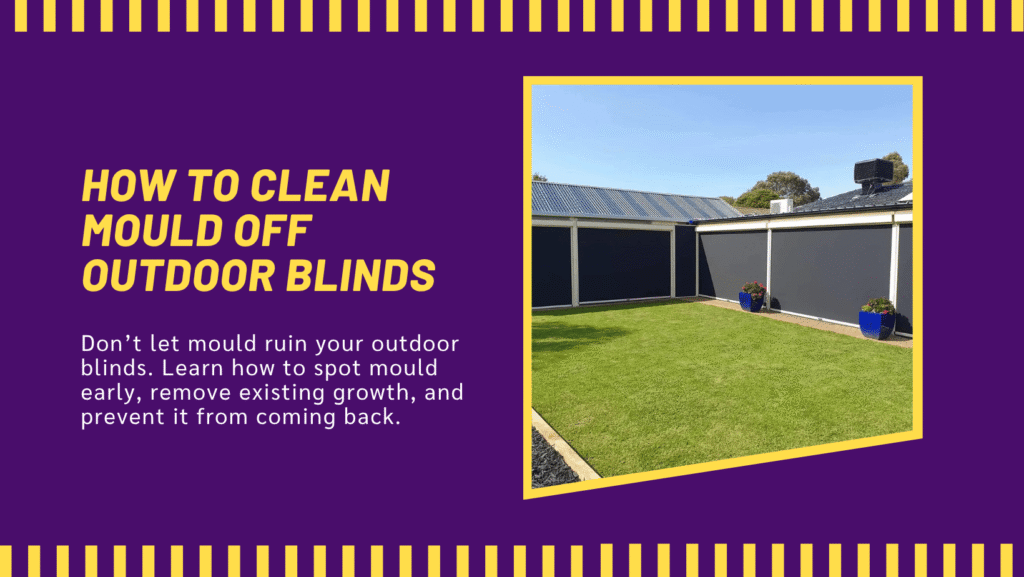
How Do You Clean Mould off Outdoor Blinds?
Mould growth on outdoor blinds isn’t uncommon.
If you can see mould beginning to develop or mould has already developed without you knowing, then it’s important to act quickly. The longer you leave it, the harder it will be to undo and the more likely you are to end up with permanent and unsightly stains.
In this guide, we’ll run you through why mould happens, what you can do to prevent it, and the steps you can take to clean mould off your blinds after it has set in.
Why does mould occur on outdoor blinds?
Outdoor blinds are, unfortunately, a breeding ground for many of the conditions that allow mould to form and thrive.
Outdoor blinds are constantly exposed to the elements. Rain, humidity, and condensation all contribute to moisture build up on blind surfaces. Unlike indoor blinds which are sheltered from the elements, outdoor blinds don’t have the same protection. They face whatever the weather brings and are left outside to fend for themselves season after season.
Mould begins to form on outdoor blinds when moisture becomes trapped in the fabric or mesh. When blinds are installed in low-airflow areas, the effects are amplified as they do not dry out and are constantly left in a “damp” state.
Mould itself is a fungus that reproduces by releasing microscopic spores into the air. The problem – mould development – starts when spores land on a surface that offers both organic matter like pollen and dust as well as moisture. Once mould spores colonise and spread rapidly across the surface of the blind which causes the blinds to appear discoloured and darker in some patches by which time mould has already set in.
How common is mould on outdoor blinds?
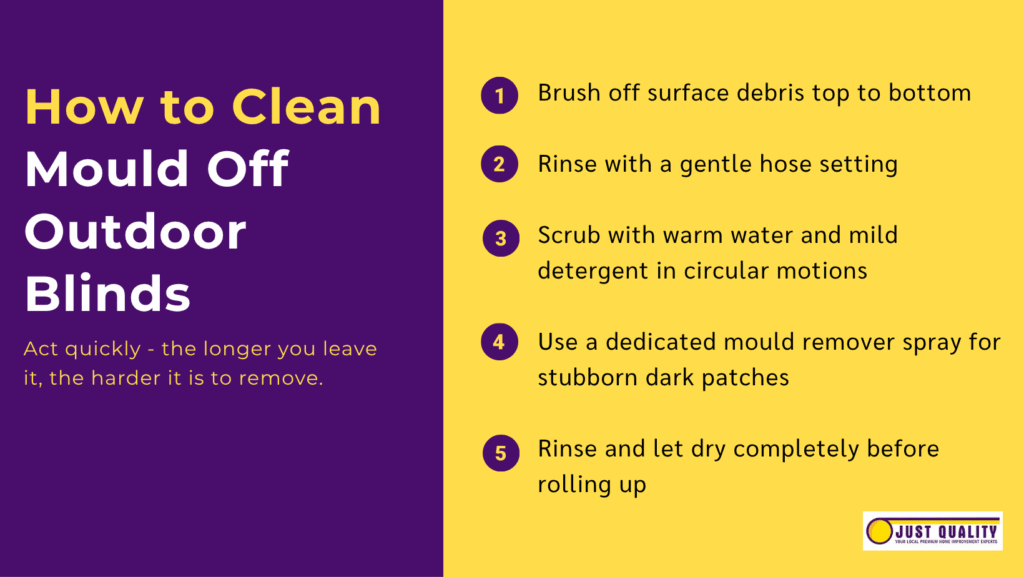
Mould on outdoor blinds is extremely common and entirely preventable.
Yes, outdoor blinds provide the perfect combination of organic matter and moisture for mould to thrive and spread, but proper care can help to minimise the chances of mould developing and damaging your outdoor blinds.
In Australia, your location plays a big role in determining how common mould is on outdoor blinds. High humidity locations along the coast are far more likely to develop mould on outdoor surfaces – including blinds – than those in the country. Constant exposure to rain, high humidity, variable temperatures, and tropical conditions create an environment where mould can quickly set in and thrive. Blinds that are left partially or completely rolled up for extended periods are also far more likely to develop mould than those that are left open to “air”.
The good news is that mould on outdoor blinds is preventable. Regular cleaning and proper maintenance create an environment where mould cannot develop and spread. Preventative maintenance and regular cleaning are the key to catching mould early. If you are already seeing the visible signs of mould on your outdoor blinds (dark spots) then the mould has already well and truly set in and it’s time for remediation.
How to clean mould off outdoor blinds
What You'll Need
- Garden hose
- Soft bristle brush
- Microfibre cloth or sponge
- Gentle, fragrance-free detergent
- Surface mould remover spray (if needed)
- P2 respirator, goggles, and gloves
- Rubbish bag for sealing and disposing wipes
Preparation
Before you clean it’s important to make sure that you are protected. Mould spores, when disturbed can cause respiratory issues and allergic reactions. Make sure that you are wearing appropriate clothing, protective goggles, gloves, and some form of respirator mask.
Prepare everything you’ll need and make sure you have your rubbish bag ready to go before you start cleaning.
Cleaning Process
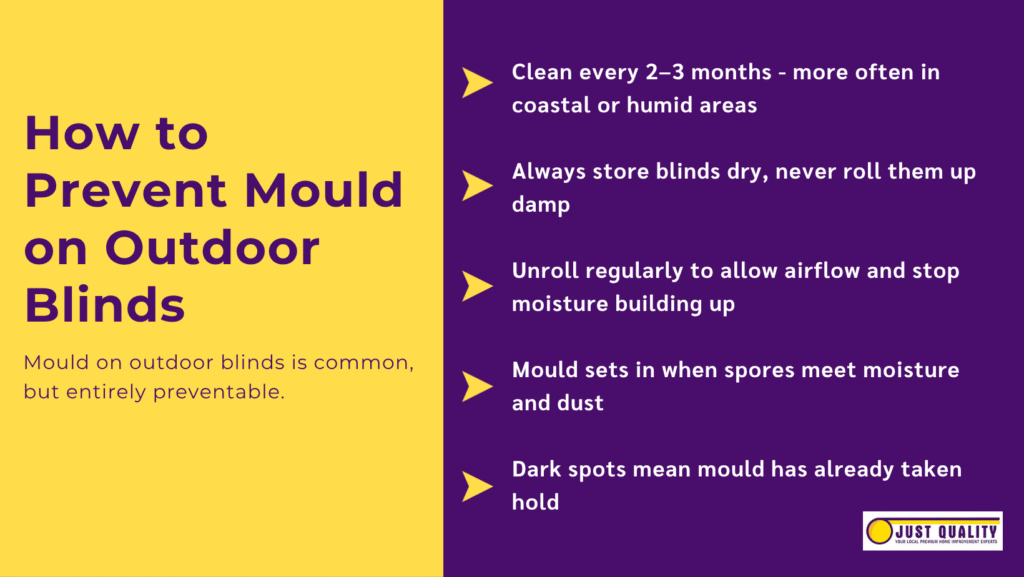
Step 1: Remove surface debris
Start by removing debris, dust, and other surface-level contaminants from the surface of the blinds using a soft bristle brush. Work from top to bottom and make sure that dust is disposed of, not just wiped onto the ground.
Step 2: Rinse the surface
Once you have removed dust, hose down the surface of the blinds using a gentle setting on your hose. Use the light mist or shower setting – avoid the jet as you risk disturbing mould and spreading particles into the air.
Step 3: Apply cleaning mix
Mix warm water with your mild detergent at a 10:1 ratio. Apply the solution to a cleaning cloth or microfibre towel and scrub in gentle, circular motions until the surface mould is removed.
Step 4: Treat mould
If you are still left with dark patches, then you may need to use a slightly stronger, dedicated surface mould and mildew remover. You can find these at any hardware shop or by searching for fabric or surface mould removal spray products. All of these products are roughly the same but make sure that you opt for one that is approved for use on blinds or materials that match your blinds.
Step 5: Rinse and dry the surface
Once you have done steps 1-3 (and 4 if needed) make sure that you raise the surface using your garden hose. Make sure that your blinds are completely dry before you roll them away. Ideally, you want to clean your outdoor blinds when the sun is out and the humidity is low to make drying easy.
Steps to step mould from developing on outdoor blinds
Preventing mould from developing on outdoor blinds comes down to preventative maintenance. Here are three simple things that you can do to prevent mould from developing on your outdoor blinds.
- Regular cleaning – every 2-3 months is usually sufficient but will depend on the local climate and weather conditions.
- Keep them dry – where possible, keep them dry and make sure they are stored in a dry environment.
- Maximise airflow – don’t leave your outdoor blinds rolled up for weeks on end. Ensure that you unroll them and allow airflow.
Outdoor blinds are designed to withstand the elements – but that doesn’t mean that they should be neglected.
Related Articles

3 Benefits Of Installing Ziptrak Blinds
Are Automated Outdoor Blinds worth it?