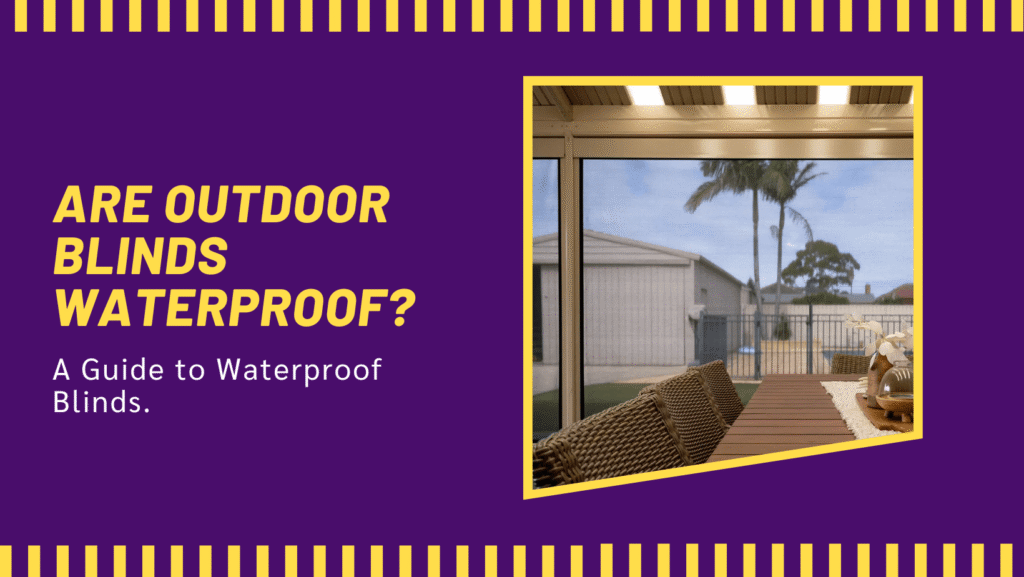
Are Outdoor Blinds Waterproof?
Outdoor blinds are a great way to cut down on sunlight and get more use out of your outdoor spaces through all seasons.
But what happens when the rain sets in? Are outdoor blinds waterproof and will they protect you against the elements?
This article will cover the basics around how outdoor blinds perform in wet weather, the difference between waterproof and water-resistant options, and what to look for when choosing blinds built to handle Australia’s varied weather conditions.
Are outdoor blinds waterproof?
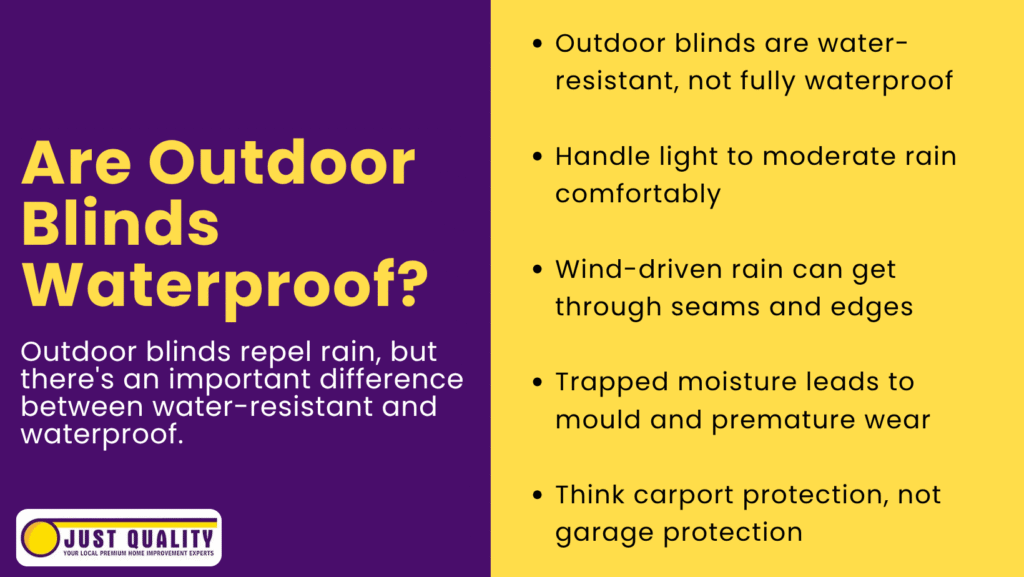
Outdoor blinds can repel water and can help to keep you dry – but they are not 100% waterproof.
Think of outdoor blinds like a rain jacket. A lightweight, water-resistant jacket will shrug off a light shower and keep you comfortable but stand out in a downpour long enough and you will eventually get wet. A premium Gore-Tex shell, on the other hand, is engineered to keep you bone dry in sustained, heavy rain. Outdoor blinds sit somewhere in the middle of this analogy.
Good quality well fitted outdoor blinds are built to repel rain and shield your space from the elements, but they are not 100% water proof.
What’s the difference between water resistant and waterproof?
The terms water resistant and waterproof are often (incorrectly) used interchangeably – but they are not the same thing.
Water resistance means that the material is designed to repel water – but it is not 100% and there will be a point where water can get through. Outdoor blinds can repel water from light to moderate showers. However, if you’re outside in a downpour and the rain is driving into the blinds – don’t expect to stay completely dry.
Waterproof means that the water cannot penetrate the material at all – irrespective of how heavy the rain is. It’s a complete barrier – more like a window than a blind.
Think of it like the difference between a carport and a garage.
A carport shelters your car from direct rain, blocks the sun, and keeps the worst of the weather off – but it’s open on the sides, so wind-driven rain can still blow in, and the floor might get wet.
A garage, by contrast, is fully enclosed. Once the door is down, no water is getting in, full stop. Outdoor blinds work much the same way. They give you carport-level protection – excellent coverage for everyday weather and a huge upgrade over an exposed space – but they’re not designed to seal your patio off like a garage.
Will water damage outdoor blinds?
Outdoor blinds are designed to be exposed to the elements. Being exposed to the rain and getting wet is part of the use case for outdoor blinds. If you invest in high-quality outdoor blinds, then you can expect them to hold up extremely well when exposed to rain.
High quality outdoor blinds are made with all weather conditions in mind. That means that they are designed to get wet and not “trap” moisture. That said, outdoor blinds that cop regular rain or heavy dew need a chance to dry properly. Trapped moisture is the main thing to watch for, especially when blinds are left partially unfurled. Trapped moisture can lead to bacteria and mould growth which can, over time, cause blinds to discolour and wear prematurely.
Will outdoor blinds keep you dry?
Yes, outdoor blinds can keep you dry – to an extent. For light to moderate rain, outdoor blinds do a very good job of repelling rain and keeping you comfortable on the other side.
Scenario 1: When outdoor blinds will keep you dry
Picture a mild autumn evening in Adelaide. Light, steady rain is falling straight down, there’s barely a breeze, and you’re enjoying dinner on the patio with the blinds drawn. In conditions like this, outdoor blinds do their job beautifully – water runs down the surface, the wind isn’t pushing rain sideways, and your outdoor space stays dry and usable.
Scenario 2: When outdoor blinds will NOT keep you dry
Now picture a classic Adelaide winter cold front rolling in off the Southern Ocean. Heavy rain is being driven sideways by strong westerly gusts, and the storm sits over the city for hours. Even quality outdoor blinds will struggle here – wind-driven rain can find its way through seams, around edges, and underneath the bottom rail. You might stay mostly sheltered, but you will want to seek shelter at some point.
Are there any types of outdoor blinds that are more waterproof?
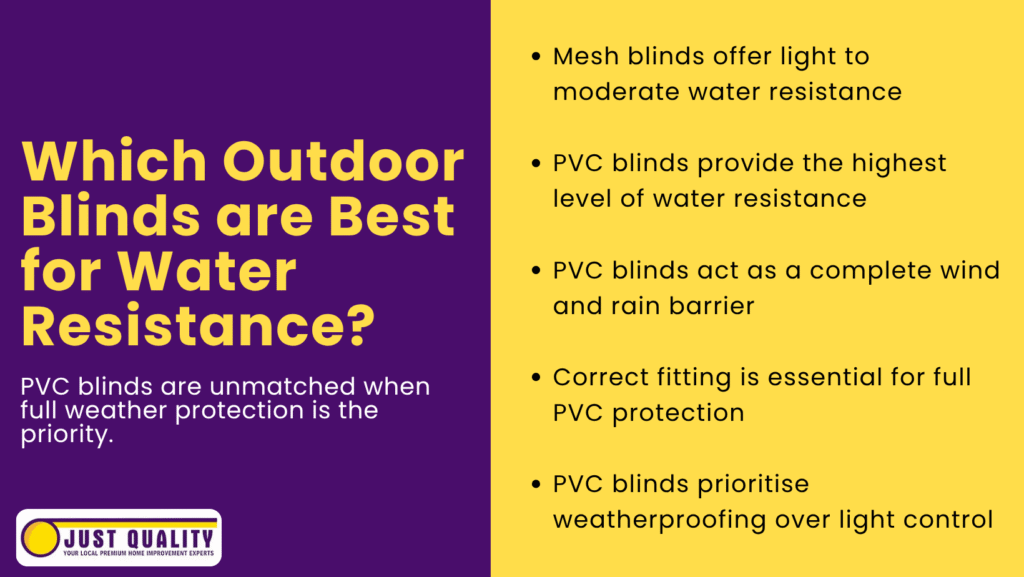
Outdoor blinds are typically made from a mesh material which allows for a level of light and water resistance. For the sake of clarity, all of the scenarios that we have discussed in this article relate to mesh outdoor blinds – which are the most common material.
For outdoor blinds that offer the highest level of water resistance, you will want to invest in clear PVC blinds. PVC blinds are – when fitted correctly – a complete waterproof layer that will keep the wind and rain at bay in any condition.
Which type of outdoor blinds are best for water resistance?
PVC blinds – also known as café blinds – are by far the best type of outdoor blinds for water resistance.
Strictly speaking, PVC blinds sit somewhere between a traditional blind and a flexible outdoor enclosure, since their primary job is weatherproofing rather than light control. They’re less common than fabric or mesh options, but unmatched when full protection is the priority.
Related Articles


3 Benefits Of Installing Ziptrak Blinds