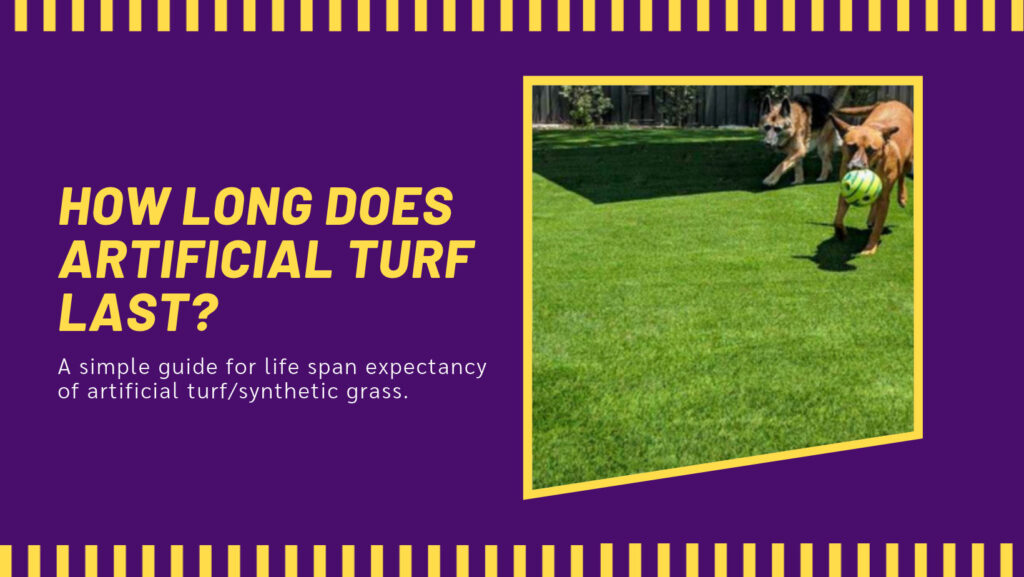
How Long Does Artificial Turf Last?
You can expect artificial grass to generally last between 10 to 25 years, with residential properties having an average lifespan of 15 to 20 years. But what determines how long you can expect it to last are the quality of the product, if it was installed properly and how well it is cared for.
How Long Does Artificial Turf Last?
You can expect artificial turf to last from 10 to 25 years under normal use.
This range might seem quite large, however so too are the quality of products available, the skill of the workmanship and the other factors that can impact how long the artificial grass can endure the elements.
Installing artificial grass can be quite the time-consuming, inconvenient and costly process. This means you want it to stand the test of time. Over the years, foot traffic, weather, pets and kids all take their toll. But above all else, it’s the quality of the product you buy and the installation that will likely have the greatest impact.
Budget Turf
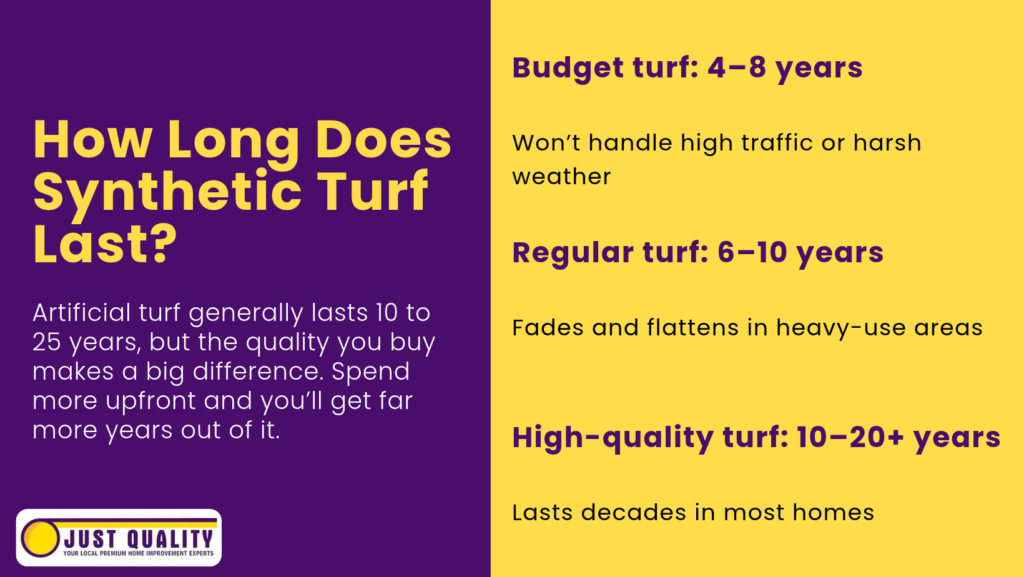
At the bottom end of the artificial grass cost range you’re looking at a product that will only last 4-8 years. It’s not a lot of time considering the costs, unless of course you’re just looking at a temporary solution for a space. Regardless, budget turfs aren’t made to handle high traffic and harsh weather, plus they typically don’t feel good underfoot, nor do they look realistic.
Regular Turf
The average artificial turf, somewhere in the cost mid-range, has an expected life of 6-10 years. This assumes it has been laid properly and has had regular maintenance. After 6 to 10 years it will start to lose colour, become a bit thinner and flatten, particularly in areas of heavy use.
High-Quality Turf
High-quality artificial turf has a long lifespan of 10-20 years. At the bottom end of that range are grasses that have been used in commercial applications or high foot traffic areas, particularly in outdoor spaces where the climate is hot and sunny. However, for most residential applications, high-quality turf that’s been laid correctly and maintained with regular cleaning, will last 20 years or more.
Factors That Impact How Long Artificial Turf Lasts
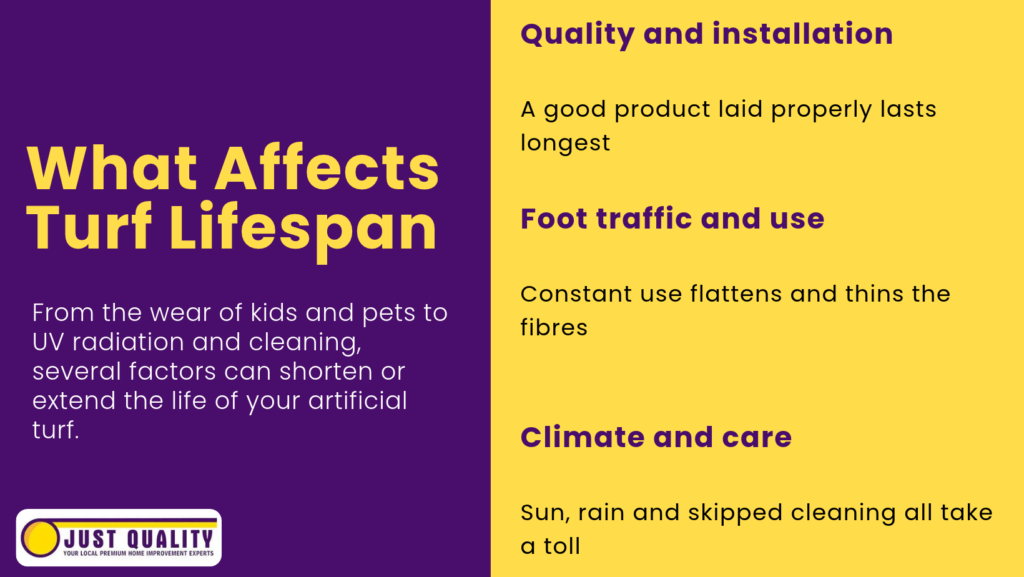
From the wear and tear of kids and pets, to UV radiation and regular cleaning, there are several elements that can either decrease or increase the life of your artificial turf.
Turf Quality
The standard of the turf you start with will be one of the greatest influences on how long you can expect it to last. It’s always advisable to get something at least in the mid-range of price and quality, and ensure it is laid properly. Ideally, get the best your budget allows, because skimping will only cost you more in the long term.
Foot Traffic
If your artificial turf is getting walked on constantly it’s going to develop visible wear and tear in the spots where it’s most frequently used. You can expect some flattening of the grass fibres and thinning too. The grass will also become creased or squashed if heavy objects like tables or barbecues are left sitting in one spot for an extended period.
Care & Maintenance
Just because it’s not a real lawn, doesn’t mean that your artificial turf is maintenance-free. Regularly blowing, sweeping or gentle raking is necessary to remove debris. It’s also good to hose the area down on occasion and clean any food or chemical spills as soon as they occur.
Workmanship of Installation
Just like buying a quality turf to begin with, having it installed by experienced professionals is also a foundational component that will have a lasting impact on how long your turf looks good. You want to ensure they use quality substrate beneath the turf, take the time to get the drainage right and compact it well, and don’t skimp on screws and glue when fixing it to the ground, including when laying artificial turf on concrete.
Local Climate
In areas where there are extremes in heat and high rainfall, you can expect the artificial grass to have a slightly reduced lifespan. Sun, temperature variations, fluctuations in humidity and rain will each take their toll, but if you have a quality turf it will likely have greater resistance to UV damage and weather.
Outdoor vs. Undercover
Artificial turf that’s laid undercover will be better protected from the elements, therefore extending its life. Undercover areas receive less sun and rain, plus typically have reduced foot traffic. Because Australians love spending time outdoors, it means more time standing, walking, running and playing on your turf.
Pets & Kids
Kids and pets have a way of shortening the life of a lot of household things – carpet, walls, floorboards and of course, artificial grass. Pets not only follow routine paths, but they can also toilet on the grass. Then there’s the wear and tear of children doing gymnastics, skipping, hopping, dropping toys or even pulling at the turf. However, if your artificial grass loses a couple years of life because your kids have been enjoying using it, well that’s not such a bad thing in my opinion.
Final Thoughts
There’s a multitude of factors that combine to impact how long turf lasts. Ultimately though, when we talk about how long it lasts, we mean how long it looks good – it doesn’t disintegrate after 6 or 10 years. What normally happens is that spots that have had the highest traffic will start to thin and flatten. The areas that have been subjected to UV rays, weather and heat will lose colour. Overall, the artificial grass will become less aesthetically appealing and nice underfoot. But rest assured that if it was installed properly in the first place and you used a quality product, then you’ll get plenty of bang for your buck.
Related Articles
Are Automated Outdoor Blinds worth it?