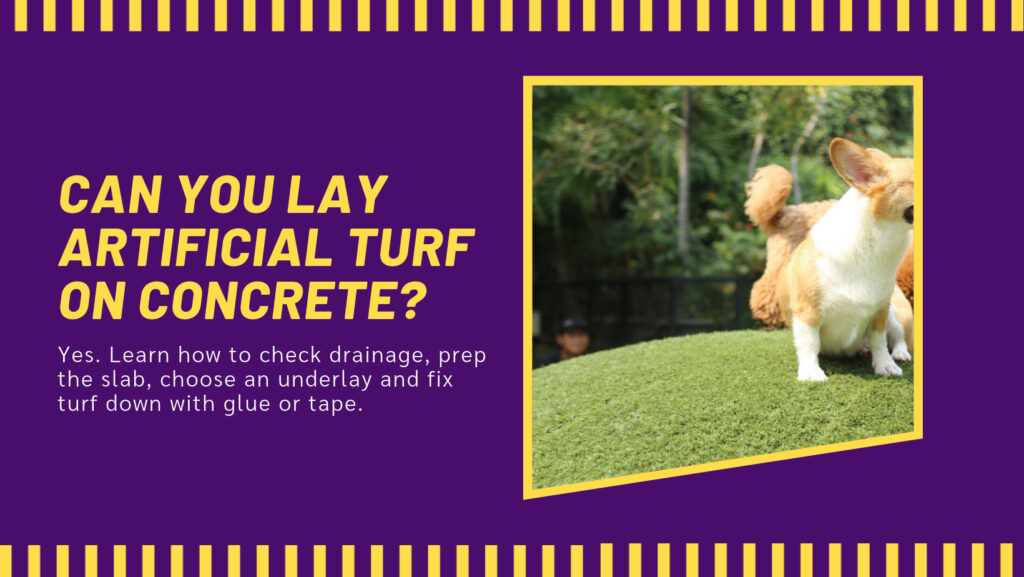
Can You Lay Artificial Turf On Concrete?
There’s no better way to transform a balcony, courtyard or patio into an aesthetically pleasing and often more practical space, than by covering it with artificial turf. It adds a soft, natural green finish that’s pleasing to the eye and gentle underfoot. However, a lot of people think that a concrete substrate means artificial grass is off the agenda, but that couldn’t be further from the truth.
Can You Lay Artificial Turf On Concrete?
Yes, you can lay artificial turf on concrete. In actual fact, it’s a highly popular and low-cost way to turn a boring, unattractive balcony, patio, courtyard or rooftop, into a functional and great looking space. What’s more, you don’t have to excavate the area, lay road base and compact the ground prior to laying the turf. The whole process can be quick, fuss-free and cost a lot less than you think.
Why Concrete Works as a Base for Artificial Turf
Concrete is an ideal foundation for laying artificial grass as it’s firm and stable, and there’s no digging up soil, hauling away debris, and building up heavy layers of crushed rock to create a foundation. Concrete slabs provide a smooth, uniform surface that prevents sinking, shifting, or uneven dips over time.
How to Check Concrete Drainage Before Laying Turf
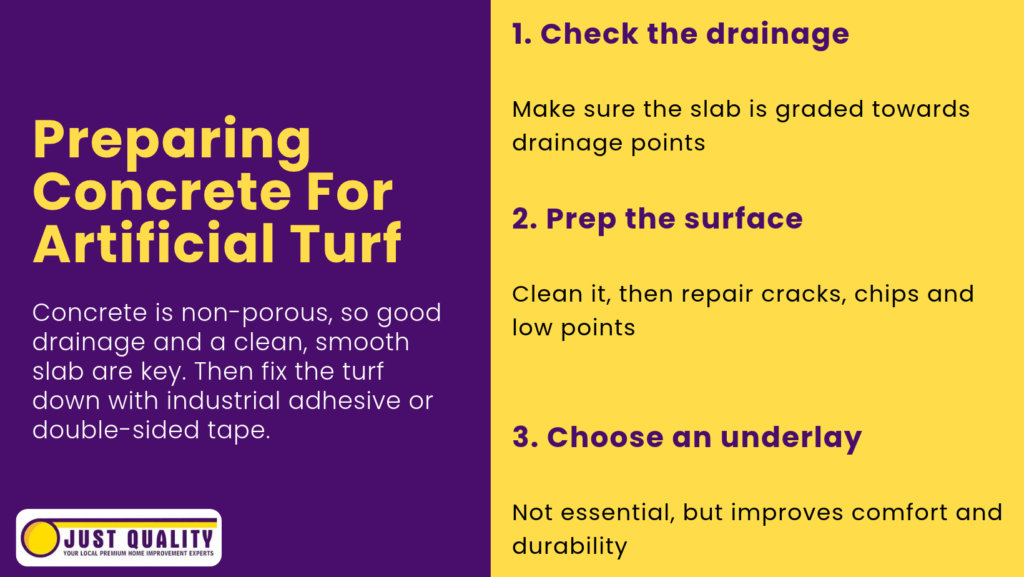
Because concrete is non-porous and will not let water filter through like a stone aggregate base, it’s important to check the drainage before laying turf. To prevent pooling, odours or mould, you have to ensure the concrete slab is graded and water has a clear path to existing drainage points. It’s also necessary to check the turf doesn’t end up blocking any drainage holes on the slab. Also, repair any cracks that may open further over time, and fix uneven/low spots in the slab to prevent pooling of water.
Preparing a Concrete Surface for Artificial Turf
Preparing a concrete surface for artificial turf starts with cleaning the space to remove any debris, oil, grease or mould. Next, repair imperfections, such as cracks, chips and low points. Look for any significant surface irregularities because they will become visible through the artificial turf over time. Once repairs are done, clean it again, because a clean surface is necessary so that outdoor adhesives and tapes bond properly.
Do You Need Underlay for Artificial Turf on Concrete?
No, you don’t have to use an underlay when laying artificial turf on concrete. You can lay artificial turf directly onto concrete, but using an underlay, such as a foam shock pad, rubber under-pad, or modular drainage cell is highly recommended as it can improve comfort, moisture management and long-term durability, which all affect how long artificial turf lasts.
Glue vs Tape for Fixing Turf to Concrete
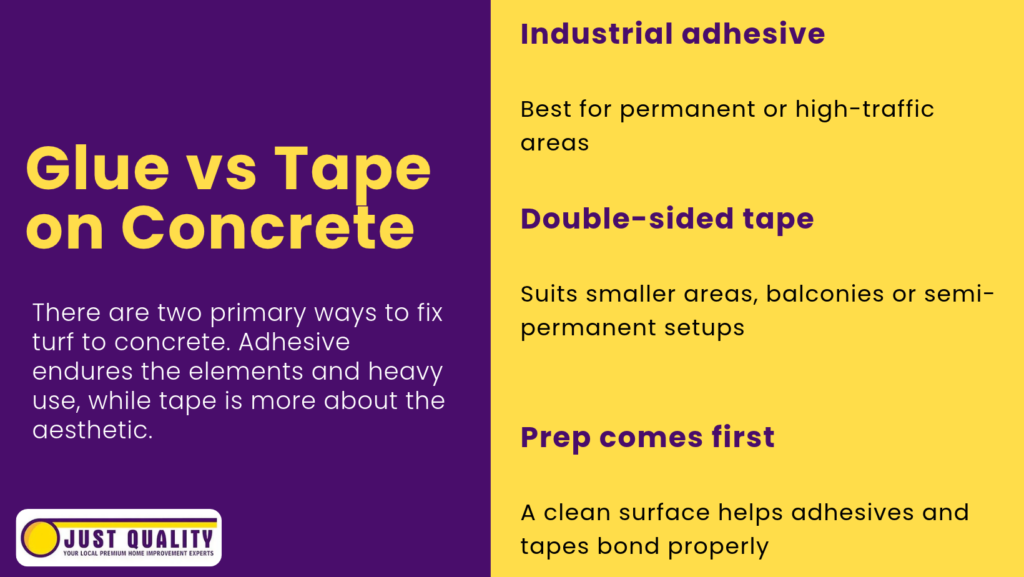
Laying Artificial Turf on Concrete starts with good surface preparation, as outlined above. But then you have two primary methods to fix the turf down: Adhesive (an industrial-grade glue) and double-sided tape.
An industrial adhesive is best for permanent or high-traffic areas, where you want something that can endure the elements and heavy use. Double-Sided Adhesive Tape is ideally suited to smaller areas, balconies, or semi-permanent setups where it’s more about the aesthetic than being durable.
Downsides of Artificial Grass on Concrete
When using artificial grass on concrete it’s important to note that artificial turf on concrete gets a lot hotter in direct sunlight than natural ground or bare concrete. This can be mitigated through shading the space or misting the ground on particularly hot days. Also, directly laying the artificial turf on concrete can feel hard underfoot unless you use a shock pad or foam underlay. Furthermore, due to concrete being non-porous, unless there’s adequate slope to assist in drainage, moisture can sit between the turf and slab, and over time this may lead to mould, mildew, unpleasant pet odours, and premature decay.
Costs of Installing Artificial Grass on Concrete
The cost to lay artificial grass on concrete compared to earth or natural ground varies considerably depending on the need for repairs or alterations to the concrete. While there is no requirement for excavation, digging, bringing in road base and compacting the ground, the concrete will need to be cleaned, cracks and low points filled and there may also be the need to create drainage. However, should the concrete be in good condition, the labour and material costs for laying artificial turf on concrete are much lower than the usual artificial grass cost of laying it on natural surfaces.
Final Thoughts
Laying artificial turf on concrete can be a fantastic way to improve the style and functionality of a space. It’s typically a relatively quick and easy process, with minimal groundwork required, and in a matter of hours you can have a gentle, natural green finish that’s great to look at and soft underfoot. But the keys to success are properly cleaning and preparing the surface beforehand, and ensuring there’s good drainage. Get these things right and that drab, hard grey slab will be a pleasant green space in no time.
Related Articles
Are Automated Outdoor Blinds worth it?