
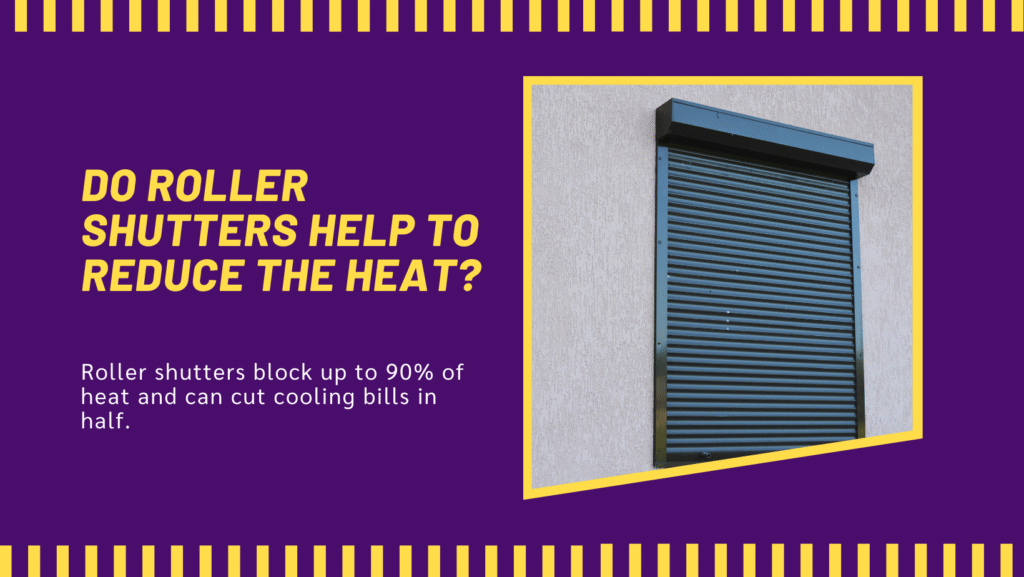
Do Roller Shutters Help to Reduce the Heat?
Roller shutters are a great way to reduce your energy bills, deter burglars, and keep your home safe with an added physical layer between your home and the outside world.
But how do they stack up in Australia’s uncompromising summer heat?
In this article, we’ll explore how roller shutters help to keep heat out of your home, the factors that determine how much heat is transmitted into your home, and how much you can expect to save on your HVAC when you install window shutters in your home.
Do roller shutters reduce heat?
Yes, roller window shutters are extremely effective at reducing heat transmission into your home by providing a physical barrier between your windows and the outside environment.
Depending on the type and quality of roller shutters that you install, roller window shutters can reduce heat transmission by as much as 90% in summer.
The net result is less heat entering your home through your windows which, in turn, means reduced reliance on your home’s air conditioning to keep your home cool and comfortable in the warm months.
How do roller shutters reduce heat?
Roller shutters create a physical barrier between your window and the outside environment.
When closed, roller shutters reflect sunlight away from your windows before it reaches the glass which prevents solar radiation from entering the home and heating up the interior. This is similar to how outdoor blinds reduce heat transmission into the home.
Roller shutters are installed on the outside of the window (outside the glass) meaning they act as a further layer on top of your windows to block direct sunlight and reduce the amount of heat that is transmitted through your windows on hot days.
Roller shutters do not prevent all heat from entering your homes. Instead, they close off one key entry point (your windows) and help to combat direct sunlight in your living spaces and bedrooms.
Do roller shutters keep cool air inside?
Yes, roller shutters don’t just prevent heat from entering your home, they also ensure that cool air stays in your home for longer during the warmer months. Windows with roller shutters over them reduce heat transmission by as much as 90%, while also keeping cool air inside for longer.
Roller shutters create a sealed/insulated barrier over your windows which acts as a “double glazing” to prevent inside ambient temperature (hot or cold) from escaping through your windows.
The net result is that window shutters can reduce your cooling bills by as much as 50% on warm days by reducing the amount of heat that enters through your windows, and the amount of inside cool air that escapes through them.
Factors that affect how well roller shutters reduce heat
Not all roller shutters are the same and not all roller shutters will provide the same level of heat reduction for your home. Below are the factors that affect how well roller shutters reduce heat in your home.
Fitment: Custom made roller shutters that are made to suit the exact size and dimensions of your windows will invariably provide more protection and lower heat transmission than “off-the-shelf” shutters. How well your shutters fit your windows will play a significant role in determining how effective your shutters are at reducing heat transmission on warm days.
Material: Thicker roller shutters made from quality materials will naturally provide a greater level of heat rejection than “thin” or cheap roller shutters. Materials such as insulated aluminium provide the greatest level of thermal insulation and ensure your home stays cooler on those warm summer days.
Maintenance: How well you take care of your roller shutters and maintain them over time will play a key role in determining how they perform on warm days. Properly serviced, cleaned, and maintained shutters will provide better protection than those that are neglected through all seasons.
Colour: Lighter colours will reflect more heat than darker colours. Light colours like white, cream, light grey, or similar will provide greater heat rejection than dark colours such as black or charcoal. Opting for a lighter, more reflective colour will naturally reduce the amount of heat before it even reaches the glass and therefore improve heat rejection on warm days.
Related Articles
3 Benefits Of Installing Ziptrak Blinds
Are Automated Outdoor Blinds worth it?